MOH's National Population Health Survey 2024 reported hypertension prevalence of 33.8% among Singapore residents aged 18 to 74. Knowing which class of medication you are on — and why — is the single biggest predictor of staying on it long-term. This guide explains the common antihypertensives prescribed in Singapore, how each works, the side effects to watch for, and how MediSave can offset the cost.
How blood pressure medications work
Blood pressure depends on three levers: how forcefully the heart pumps (cardiac output), how much fluid is in circulation (volume) and how relaxed the arteries are (peripheral resistance). Each class of antihypertensive targets one of these. The ACE Hypertension ACG and Healthier SG Hypertension Care Protocol recommend individualised targets and commonly use the first-line classes below, escalating to combinations when single-agent therapy does not reach target.
First-line classes
1. ACE inhibitors (ACEi)
Block the conversion of angiotensin I to angiotensin II, relaxing arteries and reducing fluid retention. Common in Singapore: enalapril, perindopril, ramipril, lisinopril. Usually started at low dose (e.g., enalapril 5 mg once daily) and titrated up every 2–4 weeks.
Strengths: excellent kidney protection in diabetes, reduces cardiovascular events, generally affordable as generics.
Watch for: a dry cough (10–20% of patients — switch to an ARB if it happens), raised potassium and creatinine in the first 2 weeks, and rare angioedema (more common in patients of African ancestry).
Avoid in: pregnancy, bilateral renal artery stenosis, and patients with potassium above 5.0 mmol/L.
2. Angiotensin receptor blockers (ARB)
Block the receptor angiotensin II binds to — same downstream effect as an ACEi without the cough. Common in Singapore: losartan, valsartan, telmisartan, irbesartan, olmesartan.
Strengths: same cardiovascular and kidney benefits as ACEi, no cough, very well tolerated; many are available as low-cost generics.
Watch for: raised potassium and creatinine (same as ACEi); dizziness on first dose. Never combine an ARB with an ACEi — it raises the risk of kidney injury and hyperkalaemia without extra benefit.
3. Calcium channel blockers (CCB)
Relax arterial smooth muscle. Dihydropyridines (amlodipine, nifedipine, felodipine) are the BP workhorses; non-dihydropyridines (diltiazem, verapamil) also slow heart rate and are used in patients with both hypertension and supraventricular tachycardia or angina.
Strengths: work well in older adults and patients of Asian descent; amlodipine is one of the most prescribed BP drugs in Singapore.
Watch for: ankle swelling (common — not a sign of heart failure, just leakier capillaries), flushing, gum hyperplasia. Verapamil and diltiazem can interact with statins and certain antiarrhythmics — flag any new prescription with your GP.
4. Thiazide and thiazide-like diuretics
Help the kidneys excrete more sodium and water. Common in Singapore: hydrochlorothiazide (HCTZ), bendroflumethiazide, indapamide (thiazide-like).
Strengths: cheap, effective in older adults and in lower-renin Asian patients; good evidence base for stroke prevention.
Watch for: low potassium and sodium, raised uric acid (can trigger gout), raised blood glucose at higher doses. Indapamide has slightly fewer metabolic side effects than HCTZ.
Avoid in: patients with active gout, severe hyponatraemia, or eGFR below 30 mL/min (loop diuretics are used instead).
Add-on agents for resistant hypertension
If three drugs (one of which is a diuretic) at appropriate doses aren't reaching target, this is resistant hypertension. The MOH/ACE guideline recommends adding:
- Spironolactone 12.5–50 mg daily — a mineralocorticoid receptor antagonist (MRA). Often the most effective fourth-line drug; watch potassium closely.
- Beta blockers (bisoprolol, metoprolol, carvedilol) — preferred in patients with concomitant heart failure, post-MI, atrial fibrillation or angina, rather than as routine first-line.
- Alpha blockers (doxazosin, prazosin) — useful in men with concurrent benign prostatic hyperplasia.
- Centrally acting agents (methyldopa, moxonidine) — methyldopa remains the antihypertensive of choice in pregnancy.
Before escalating, always confirm true resistant hypertension by ruling out white-coat effect (with home BP monitoring or 24-hour ambulatory BP), poor adherence and secondary causes such as obstructive sleep apnea, primary aldosteronism, renal artery stenosis or kidney disease.
Fixed-dose combinations
Combining two classes in a single tablet improves adherence and is often more affordable per drug than two separate tablets. Common pairings in Singapore include:
- ACEi or ARB + diuretic (e.g., perindopril/indapamide, valsartan/hydrochlorothiazide).
- ACEi or ARB + CCB (e.g., perindopril/amlodipine, telmisartan/amlodipine).
- Triple combinations — ARB + CCB + diuretic in a single tablet for resistant cases.
Switching from two separate tablets to a single combination typically improves home BP readings by 3–5 mmHg, mainly via better adherence.
Titration and monitoring
BP medication is rarely started at maximum dose. The standard Singapore approach:
- Check BP after 2–4 weeks of starting or changing a medication. Use averaged home readings if possible.
- Check kidney function (creatinine/eGFR) and electrolytes (sodium, potassium) 1–2 weeks after starting an ACEi, ARB, MRA or diuretic.
- Aim for BP below 130/80 mmHg in patients with diabetes, established cardiovascular disease or chronic kidney disease, and below 140/90 in others (a slightly higher target may be appropriate for frail elderly).
- Once stable, repeat blood tests every 6–12 months.
Special populations
- Pregnancy: methyldopa, labetalol and nifedipine are preferred. ACE inhibitors, ARBs and direct renin inhibitors are contraindicated.
- Chronic kidney disease: ACEi or ARB first-line, especially with proteinuria; loop diuretics replace thiazides when eGFR is below 30.
- Older adults (≥ 80): a slightly higher BP target of 140/90 is reasonable; avoid orthostatic hypotension by titrating slowly.
- Diabetes: ACEi or ARB preferred to protect the kidneys; SGLT2 inhibitors (taken for diabetes) also lower BP modestly.
Adherence and cost in Singapore
Hypertension is covered under the MediSave Chronic Disease Management Programme (CDMP). Under the current MediSave500/700 scheme, patients may use up to S$500/year from MediSave for outpatient treatment of selected chronic conditions, or S$700/year if they meet the complex chronic disease criteria. Most generic antihypertensives are inexpensive — a month's supply of amlodipine, losartan or HCTZ typically costs S$5–15.
Adherence is the single biggest determinant of outcomes. Tips that consistently help:
- Once-daily dosing where possible — switch twice-daily regimens to extended-release equivalents.
- Tie the dose to an existing daily habit (after brushing teeth, with morning coffee).
- Use a 7-day pill organiser; set a phone alarm.
- Bring all your tablets (including supplements) to every consult — "brown bag review" catches duplications and interactions.
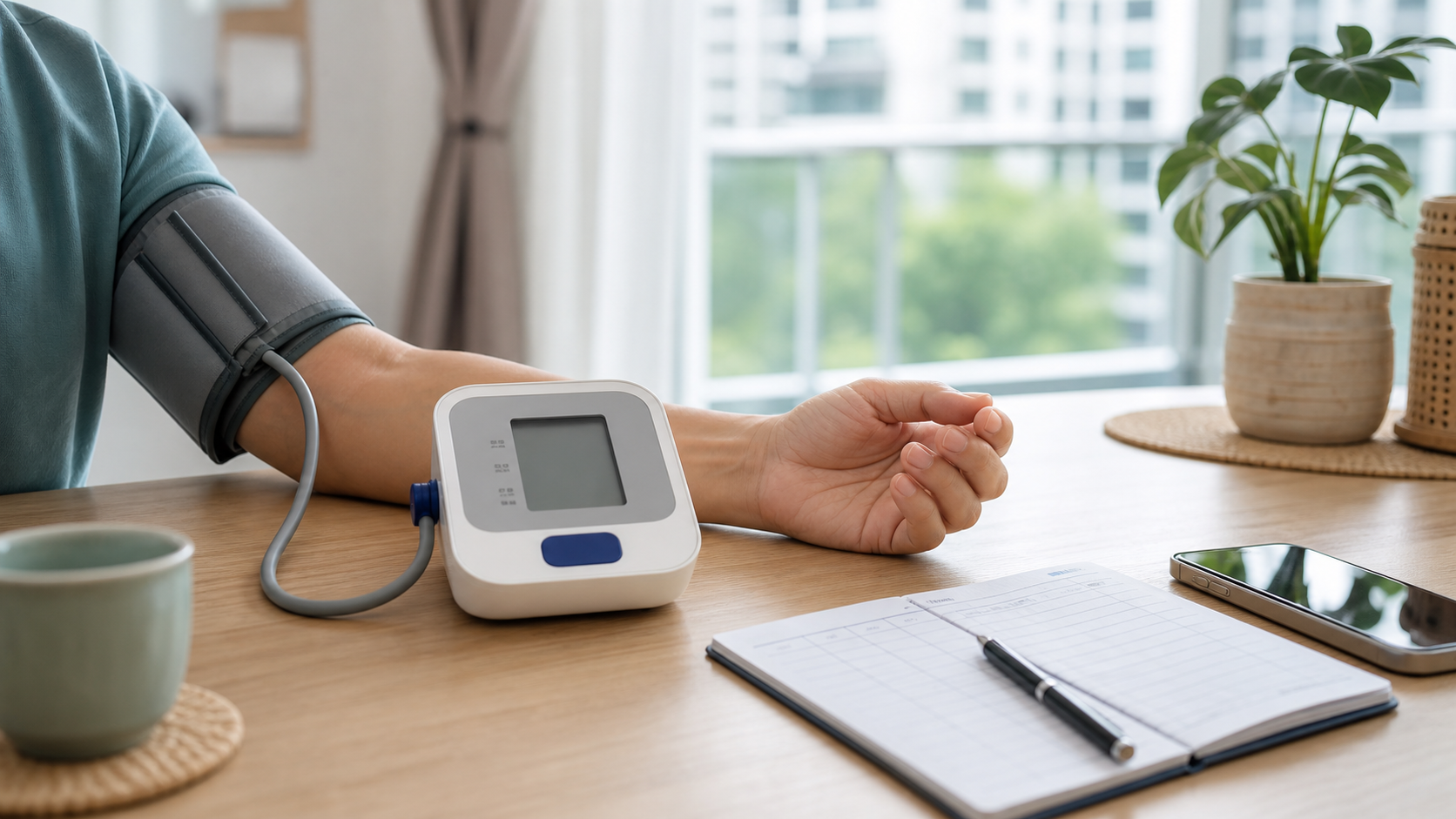
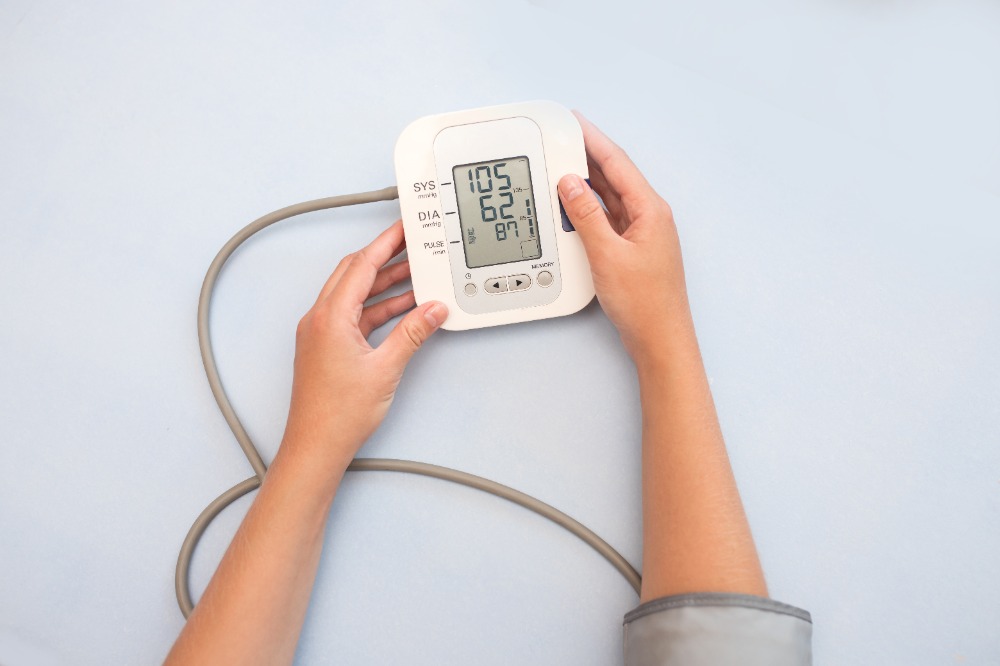
- Track BP at home twice a week, not daily — daily monitoring tends to increase anxiety without improving control.
When to see a doctor
Speak to a doctor if any of the following apply:
- BP at any single reading is 180/120 mmHg or higher — this needs same-day medical review even without symptoms.
- Headache, chest pain, breathlessness, blurred vision or weakness alongside high BP — go to an A&E.
- Side effects you suspect are caused by medication (cough, ankle swelling, dizziness, fatigue) — most can be resolved by switching class rather than stopping treatment.
- BP remains above target after three months on current treatment.
- You are planning pregnancy and currently on an ACE inhibitor or ARB — these must be switched before conception.
A short teleconsult is usually enough to review your home BP log, reconcile your medication list and adjust doses. $15 nett with an SMC-registered GP; same-day medication delivery available.
Frequently asked questions
Will I have to take BP medication for life?
Usually, yes — hypertension is a long-term condition rather than an episode that resolves. Some patients who lose significant weight and stick with strict lifestyle changes can step down to lower doses or fewer drugs, but stopping entirely usually leads to BP rising again. Aim for stable control rather than "cure".
Can I take my BP medication at night instead of in the morning?
For most patients, the time of day matters less than taking it consistently. Patients with nocturnal hypertension (non-dipper pattern on 24-hour ambulatory monitoring) may benefit from one evening dose. Discuss the option with your doctor — there is no need to change without a reason.
What are the most common side effects to expect?
Dry cough (ACE inhibitor — switch to ARB), ankle swelling (calcium channel blocker — usually mild), tiredness or cold hands (beta blocker), low potassium or raised uric acid (thiazide diuretic), gynaecomastia or breast tenderness (spironolactone, rare). Most can be managed by adjusting dose or switching within the same family rather than stopping treatment.
Can I drink alcohol or coffee on BP medication?
Moderate alcohol (one drink/day for women, two for men) is fine for most patients; binge drinking spikes BP and can interact with central agents and beta blockers. Caffeine has a small short-term effect on BP but no significant long-term impact; if you tolerate coffee well, you do not need to give it up.
Does MediSave cover BP medications in Singapore?
Yes — hypertension is one of the chronic conditions covered under the MediSave Chronic Disease Management Programme (CDMP). Patients can use up to S$500/year, or S$700/year if they meet the complex chronic disease criteria, from MediSave towards consultations and approved medications at participating clinics.
Sources reviewed
The bottom line
Most patients on a well-chosen combination of two or three first-line agents (an ARB, a CCB, plus a thiazide if needed) reach target without significant side effects. The biggest barriers are adherence and missed follow-up rather than the medication itself.
If you would like a Singapore-licensed GP to review your medication list, optimise the regimen and arrange MediSave-claimable refills, you can book a $15 nett teleconsult and have your medication delivered the same day.