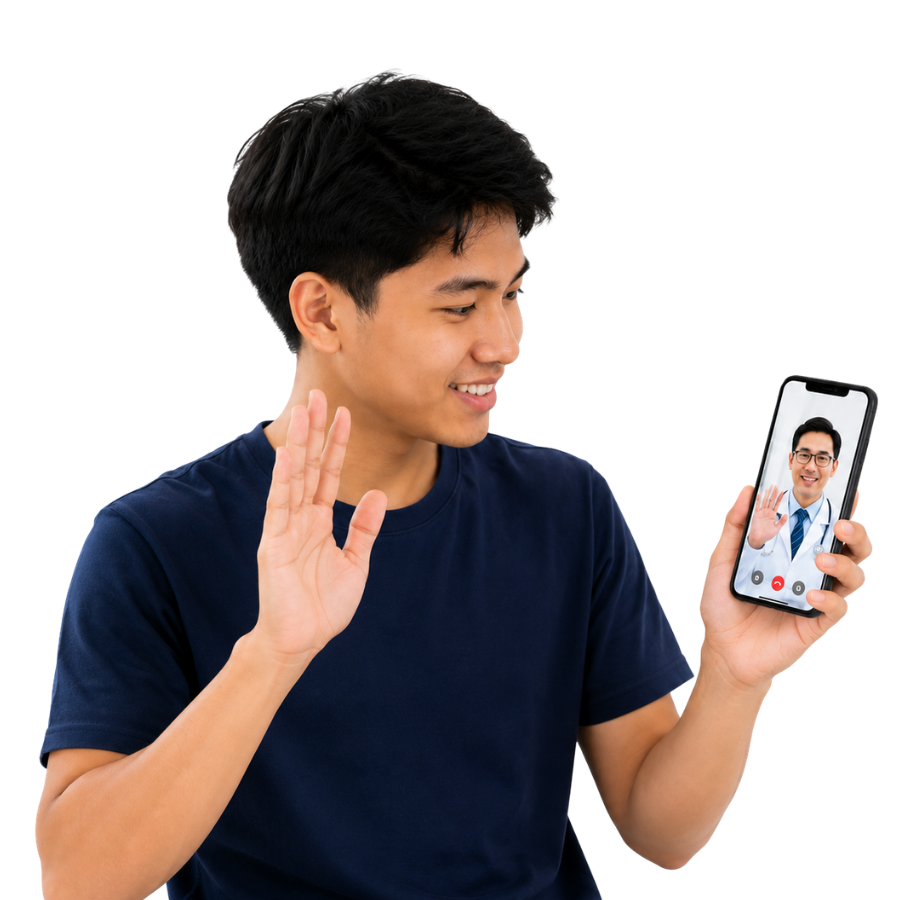
When people search for an MOH-accredited telemedicine provider in Singapore, the real concern is usually trust: will this online doctor service assess me properly, issue documents responsibly, prescribe safely, and be accountable if something goes wrong? That is why licensing matters. Telemedicine is not just a convenience app. It is medical care delivered remotely.
Singapore regulates telemedicine through the Healthcare Services Act (HCSA). HealthHub explains that telemedicine providers are now licensed under HCSA to keep patients safe, and advises patients to use services licensed in Singapore. For patients, licensing is important because it connects the online consult to a regulated healthcare provider, registered doctors, clinical standards, records, and regulatory oversight.
Quick answer
A licensed telemedicine provider gives patients a safer starting point because the service is accountable under Singapore healthcare regulation. Licensing does not mean every online consult is suitable, and it does not guarantee an MC or medication. It means the provider is expected to meet Singapore standards for how remote medical care is delivered, documented, supervised, and escalated when video care is not enough.
Licensing makes the provider accountable
Without licensing, an online medical service can look professional while leaving patients unclear about who is responsible for the care. A licensed service should have an accountable healthcare provider behind it, not just a website, booking form, or messaging workflow.
That matters if there is a complaint, a missing document, a medication issue, poor documentation, or a safety concern. MOH can audit and take regulatory action against licensed providers and key appointment holders when standards are not met. Patients should not have to rely only on a platform's customer support policy for medical accountability.
Licensing covers remote care, not only clinic premises
Older clinic regulation was built mainly around physical premises. HCSA is broader: it regulates licensable healthcare services and their modes of service delivery, including care delivered remotely where approved. This matters because teleconsults happen outside the traditional clinic room, but the clinical responsibility should still be real.
For a patient, the practical question is not whether the provider has a nice app. It is whether the provider is approved to deliver the relevant healthcare service remotely, and whether the teleconsult is run as a proper clinical service rather than a document or medication vending workflow.
Licensing supports proper doctor assessment
A safe teleconsult still needs medical assessment. The doctor should confirm identity, ask about symptoms and timing, review allergies and medical history, assess whether video is enough, explain red flags, and document the plan. If the consult is too short or too limited to support a safe decision, the doctor should ask for more information or direct the patient to in-person care.
SMC states that doctors must be registered and hold a practising certificate before practising medicine in Singapore. For telemedicine, that professional accountability matters because the doctor is still making real clinical decisions: diagnosis, MC issuance, referral, prescription, or escalation.
Licensing protects MC and prescription integrity
Many patients use online doctor services for common acute illnesses and may need an MC or medication. Licensing matters here because MCs and prescriptions should follow from a genuine clinical assessment, not from a pre-decided commercial promise.
MOH enforcement actions in 2024 showed why this is important. MOH raised concerns about very short teleconsultations, multiple MCs issued over short periods, prescriptions and MCs after brief calls, and poor documentation. Those examples show the risk when telemedicine is treated as a high-volume transaction instead of clinical care.
A responsible provider should be comfortable saying no: no MC if the patient is not medically unfit, no antibiotics when they are not indicated, no refill if the medication is unsafe without review, and no teleconsult if in-person examination is needed.
Licensing helps with records and continuity of care
Good medical records are not paperwork for its own sake. They help the next doctor understand what happened, why a medication was prescribed, why an MC was issued, and what red flags were discussed. Poor records can compromise follow-up care, especially if symptoms worsen or another doctor needs to review the case.
This is one reason patients should avoid services that feel like a form submission with minimal doctor interaction. A licensed telemedicine service should treat the consult as a clinical encounter that needs proper documentation and continuity.
Licensing does not make teleconsult suitable for every condition
Even a licensed provider should not manage every problem online. Teleconsults are usually better for non-urgent symptoms, simple follow-ups, medication questions, and conditions where the doctor can assess safely by video. They are not a replacement for physical examination, oxygen measurement, blood tests, imaging, procedures, or emergency treatment.
Call 995 or go to A&E for chest pain, severe breathlessness, stroke-like symptoms, fainting, severe abdominal pain, heavy bleeding, seizure, severe allergic reaction, major injury, or a child who is very drowsy, dehydrated, or difficult to wake. Licensing is a safety baseline; clinical suitability still depends on symptoms.
How patients can check a telemedicine provider
- Provider identity: The clinic or healthcare provider name should be visible.
- Singapore licence information: The service should explain its Singapore healthcare licence or link to licensing details.
- Registered doctors: Consults should be handled by doctors registered to practise in Singapore.
- Real assessment: The workflow should involve enough clinical assessment, not just an MC or medication request form.
- Clear limits: The provider should explain when teleconsult is unsuitable and when to seek urgent care.
- Transparent fees: Consult, medication, delivery, after-hours fees, and document handling should be clear.
- Support and records: There should be a way to resolve document, prescription, or follow-up issues after the consult.
Where DigitalHealth.sg fits
DigitalHealth.sg provides online GP consults for suitable non-emergency conditions, with SMC-registered doctors, DigiMCs only when clinically appropriate, and medication delivery support when suitable. Patients can review DigitalHealth.sg licensing information, doctor information, and the online doctor consultation flow before joining the queue.
If you are still comparing providers, read our guide to checking whether online doctors are legit in Singapore, the telemedicine provider comparison guide, and what happens during an online doctor consultation.
Sources reviewed
Frequently asked questions
Why is telemedicine licensing important in Singapore?
Licensing connects the online consult to a regulated healthcare provider, Singapore standards, clinical governance, medical records, and regulatory action if care is unsafe.
Does licensing mean an online doctor can always issue an MC?
No. An MC should be issued only when a registered doctor assesses that the patient is medically unfit. Licensing supports accountability, but it does not guarantee MC issuance.
Does licensing mean teleconsult is safe for every symptom?
No. Teleconsult is not suitable for emergencies or conditions needing physical examination, tests, imaging, procedures, or urgent treatment.
How can I check if an online doctor service is safer to use?
Look for visible provider identity, Singapore licensing information, registered doctors, real clinical assessment, clear limits, transparent fees, and support after the consult.